Aluminium Louvres in Malaysia: Box Louvres, Louvre Doors & Window Systems
Quick Answer
Aluminium louvres in Malaysia come in three main types: box louvres (M&E ventilation), louvre doors (full-height access panels), and window louvres (residential ventilation). Standard panel sizes range 600–1200mm wide, 1.8–2.4m tall. Cost ranges RM 280–450 per sq ft installed. JWE Premier fabricates all three types in-house at our Taman Danau Desa workshop.
Complete guide to aluminium louvres for Malaysian commercial buildings. Box louvres, louvre doors, fixed and adjustable louvre partitions, and architectural screening systems. Specs, blade configurations, applications, and pricing.
What are Aluminium Louvres?
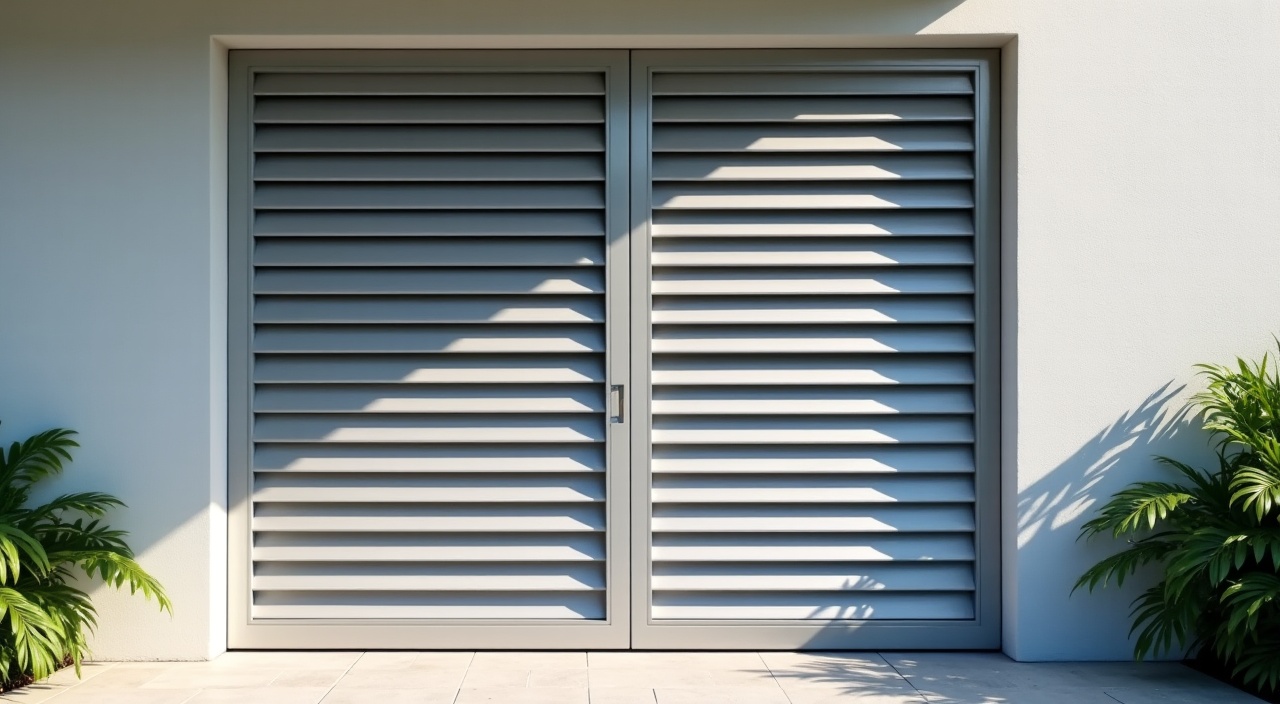
Aluminium louvres are parallel angled blades within an aluminium frame, providing controlled airflow with weather protection, visual screening, and security. They are the standard solution for spaces that require ventilation without exposing the interior to weather or unauthorised access.
Common applications in Malaysian commercial buildings include M&E rooms, bin centres, generator rooms, gas storage rooms, plant rooms, car parks, and architectural screening of service yards. JWE Premier fabricates and installs the full range.
Types of Aluminium Louvre Systems
Box Louvres (Wall-Mounted Panels)
Wall-mounted louvre panels set into a box frame. Used as intake or exhaust openings in building envelopes — typically as part of a building's HVAC system or as architectural screens for car parks, plant rooms, and service yards. See box louvres.
Louvre Doors
Door-sized louvre panels installed as access doors to M&E rooms, bin centres, and similar spaces. Fixed or adjustable blade configurations. See louvre doors.
Fixed Louvre Partitions
Full-height louvre panels used as room dividers or internal screens. Common in modern commercial offices where natural airflow and visual privacy are both desired. Can be combined with glass or solid panels.
Adjustable Louvre Systems
Blades pivot on a central rod operated by a lever or handle. Allows the user to open, close, or angle the blades to control airflow. Used where ventilation requirements vary by season or operating mode.
Louvre Windows
Smaller-format aluminium louvre panels installed as window systems for stairwells, plant rooms, and ventilation applications in industrial buildings.
Common Applications in Malaysia
- M&E / plant rooms: Generator rooms, chiller plant rooms, lift motor rooms, switchgear rooms
- Bin centres: Refuse collection rooms in commercial buildings and condominiums — ventilation reduces odour and improves IBC compliance
- Gas enclosures: LPG storage rooms, gas meter rooms, chemical storage requiring permanent ventilation
- Car park ventilation: Exhaust and intake louvres in basement and podium car parks
- Architectural screening: Service yards, refuse areas, and unsightly building elements concealed behind a louvre screen
- Boiler rooms: Industrial boiler and incinerator rooms requiring combustion air intake
- External window systems: Stairwell ventilation, plant room windows
Blade Configurations & Airflow
Louvre performance is measured by airflow coefficient and pressure drop. The configuration of blades determines how much air passes through:
- Blade depth: 50mm, 75mm, 100mm, 150mm. Deeper blades provide better weather protection but reduce airflow.
- Blade pitch: 30-degree pitch is optimal for rain rejection with 50% free area. 45-degree pitch provides maximum airflow but reduced rain rejection.
- Blade spacing: Closer blade spacing reduces see-through but also reduces free area.
- Frame depth: 100mm standard, 150mm for high-rainfall exposures.
For monsoon-exposed orientations, JWE Premier recommends a 100mm blade depth at 30-degree pitch with a 150mm frame depth. This combination rejects 95% of wind-driven rain while maintaining 40% free area for airflow.
Material Specifications
All JWE Premier louvre systems use marine-grade aluminium extrusions with the following specifications:
- Aluminium alloy 6063 T5 or T6 (architectural grade)
- Wall thickness 1.2–1.8mm depending on blade size
- Stainless steel 304 or 316 fixings and operating hardware
- Polyester powder coating to 60–80 microns (15-year warranty)
- Optional anodised finish to 25 microns for coastal applications
Pricing in Malaysia (2026)
| System | Blade Size | Indicative Price (per sq ft) |
|---|---|---|
| Fixed louvre door | 50mm | RM 40–65 |
| Fixed louvre door | 100mm | RM 70–110 |
| Adjustable louvre door | 100mm | RM 110–180 |
| Box louvre (wall opening) | 100mm | RM 80–130 |
| Fixed louvre partition | 100mm | RM 90–140 |
| Louvre window | 75–100mm | RM 70–120 |
For an accurate quote, send us your opening dimensions and blade configuration. We respond within 48 hours.
Frequently Asked Questions
What is the difference between aluminium louvre doors and box louvres?
Louvre doors are door-sized louvre panels installed as access doors to M&E rooms, bin centres, and similar spaces. Box louvres are smaller wall-mounted louvre panels installed as part of the building envelope for HVAC intake or exhaust. Both use the same blade geometry but different frame configurations.
Are aluminium louvre doors secure?
Standard fixed louvre doors are not security-rated — they allow airflow and visual screening but can be defeated by determined intruders. For secure applications, we add internal mesh grilles (stainless steel or aluminium) or specify inverted-blade designs that prevent reach-through. JWE Premier can also fabricate louvre doors with integrated lockable panels.
Can louvre doors withstand heavy rain?
Yes, when properly specified. Our 100mm blade depth with 30-degree pitch and 150mm frame depth rejects 95% of wind-driven rain in laboratory testing. For monsoon-exposed installations, we add drainable blade channels and a secondary drip edge.
Do you fabricate custom blade configurations?
Yes. JWE Premier fabricates custom blades from 50mm to 200mm depth, various pitch angles, and special profiles (storm-proof, inverted, aerodynamic). Send us your airflow and rain rejection requirements and we'll design the optimal configuration.
What are common commercial uses for box louvres?
Common commercial applications for box louvres include: HVAC intake and exhaust in mechanical rooms, car park ventilation (basement and podium), plant room screening, generator room ventilation, boiler room combustion air intake, kitchen exhaust make-up air, service yard screening, and architectural screening of unsightly building elements.
Need a Louvre or Box Louvre Quote?
Send us your opening dimensions, location, and intended application. We'll specify the right blade configuration and provide a written quote within 48 hours.
Related Resources
Louvre Doors Range
Technical specifications and configuration options.
Louvre Doors Cluster Guide
Deep dive on blade configurations, applications, and airflow.
Box Louvres
Wall-mounted louvre panels for HVAC applications.
Aluminium Doors in KL & Selangor
Service area coverage across the Klang Valley.