
Glass Canopies & Skylights
Laminated safety glass canopies and skylights for commercial entrances, covered walkways, and architectural roofs — spider fitting and aluminium capping systems, integrated drainage, and structural silicone pointing.
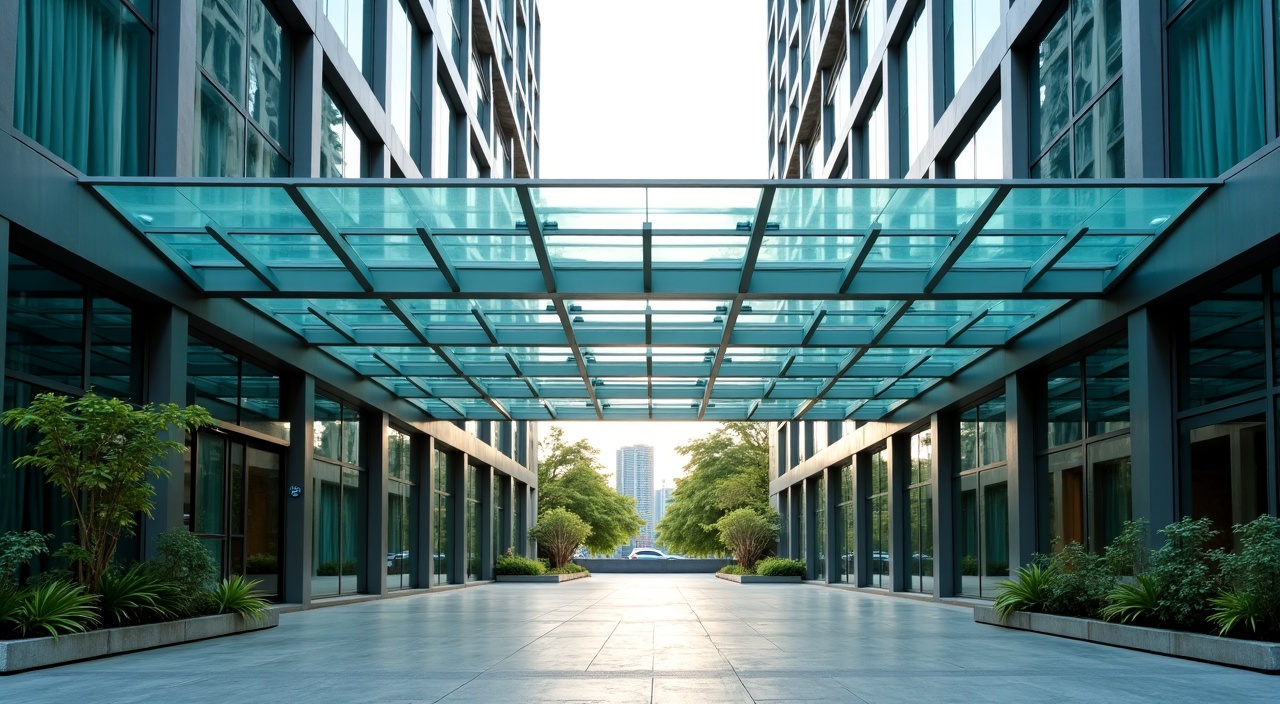
Overhead Glass — Safety is the Starting Point
A glass canopy or skylight directly above a pedestrian area represents a unique safety challenge: if the glass fails and falls, it falls onto people below. This makes overhead glazing the most strictly regulated category of architectural glass, and the reason why the structural specification, fixing system, and waterproofing of a glass canopy cannot be approached the same way as a shopfront facade. Every glass panel installed overhead must be laminated — not just tempered — so that if the glass is impacted and breaks, the fragments are retained by the interlayer rather than falling as sharp debris onto people below.
JWE designs and builds glass canopy and skylight structures in two primary configurations: spider fitting systems (where glass panels are point-fixed to a steel or aluminium substructure using structural stainless steel fittings at panel corners) and aluminium capping systems (where panels are held in continuous aluminium framing with weather-sealed joints). Spider fitting systems provide the cleanest visual appearance for architecturally prominent canopies. Aluminium capping systems are more economical and individual panels can be replaced without disturbing adjacent glass. Both systems require correctly designed drainage to manage the large water volumes that a Malaysian monsoon delivers to a canopy surface.
Laminated Safety Glass Only
All overhead glass is laminated — PVB or SGP interlayer depending on application. Tempered-only glass is never used overhead: tempered glass shatters completely into granules that fall freely. Laminated glass retains fragments in the interlayer even when broken.
Spider & Capping Systems
Spider fitting systems provide architectural transparency with minimal framing for prominent entrances. Aluminium capping systems are economical and maintainable for large canopy areas. We advise on the appropriate system based on span, budget, and maintenance access requirements.
Integrated Drainage Design
A canopy without properly designed drainage pools water at joints and eventually fails. We design drainage falls into the canopy geometry and incorporate integrated gutter channels that discharge water to downpipes — not onto the pedestrian area below the canopy perimeter.
Also: Leak Repair
We Fix What Others Build Badly
JWE is regularly called to diagnose and repair glass canopy and skylight leaks where other contractors have applied multiple layers of silicone without identifying the actual water entry path. Our glass maintenance team handles leak diagnosis, sealant remediation, and glass panel inspection as a specialist service.
Get a Canopy Quote
Share your canopy span dimensions, structural support type, and desired glass appearance. We will design the system and provide a full quotation including drainage design.
Request a QuoteOr call 012-2640888
Common Applications
- Building main entrance canopies
- F&B outdoor dining covers
- Atrium roof glazing
- Residential bungalow skylights
- Covered walkway glazing
Frequently Asked Questions
Why can tempered glass not be used for overhead glazing?
Tempered glass, when broken by impact, shatters completely into small granules. In an overhead application, these granules fall freely onto people below. Laminated glass retains its fragments in the PVB or SGP interlayer even when completely broken — the broken panel sags but does not shed glass. This is why laminated glass is the mandatory standard for overhead glazing under UBBL and international codes. We never install tempered-only glass overhead, regardless of what other contractors may offer.
Can a glass canopy be retro-fitted over an existing concrete beam structure?
Yes — most glass canopy projects are retrofits onto existing structural frames. The key requirement is that the structural frame can carry the glass load (typically 30–50 kg/m² for standard laminated glass canopy) plus wind uplift load. We assess the existing structure's capacity before designing the fixing system. If the existing frame is inadequate, we design a supplementary steel subframe that distributes the load to adequate support points.
How are glass canopy leaks diagnosed and repaired?
Canopy leaks are diagnosed by systematic water testing from above while observing from below — tracing the actual water path rather than assuming the leak is at the most visible wet point. The water entry point and the visible drip location are often in different places. Once identified, we remove all sealant in the affected zone completely (not spot-patch over it), prime the substrate, and apply marine-grade structural silicone. Drainage channels are also inspected for blockage, which is a common secondary cause of ponding that accelerates sealant failure.