
Glass Staircases
Multi-layer SGP laminated glass stair treads and frameless glass staircase enclosures for luxury residences, corporate offices, and architectural showpieces — anti-slip surface treatment, stainless steel structural interfaces, and engineer-stamped load calculations.
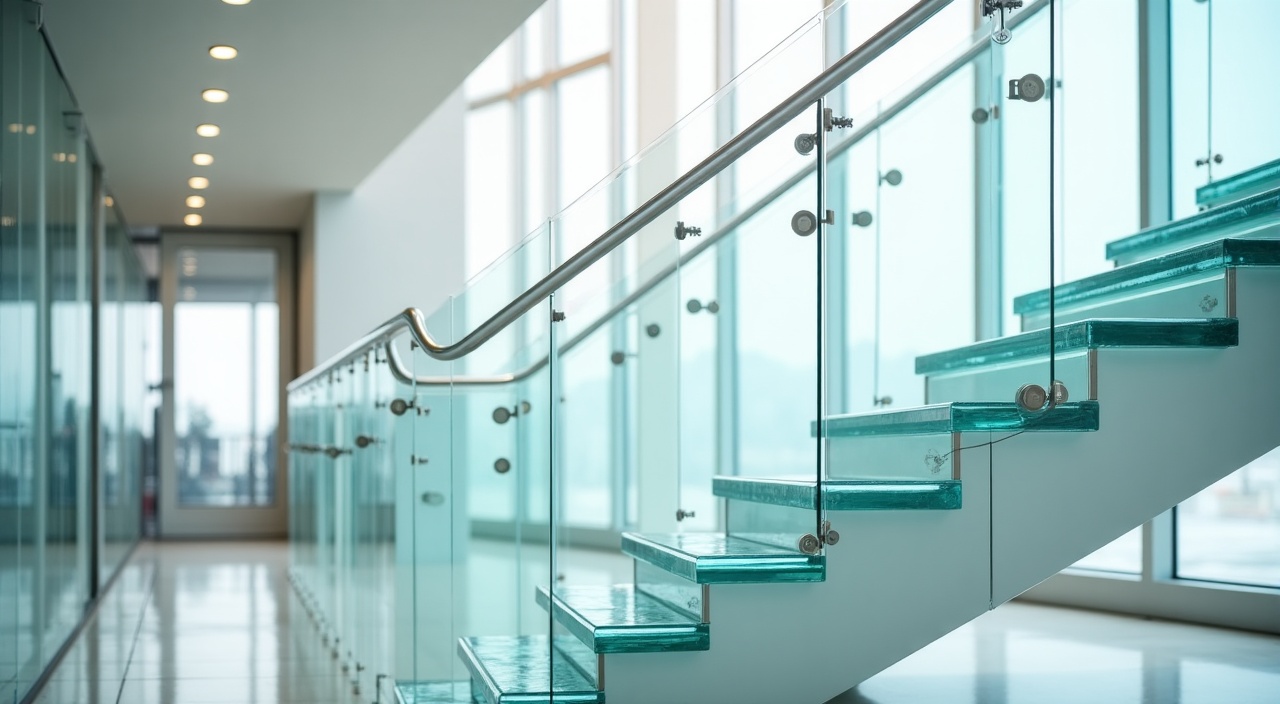
Treading on Light — The Most Demanding Glass Installation in a Building
A glass staircase is the architectural centrepiece of any interior it occupies. The combination of visual lightness, structural precision, and the dramatic effect of light passing through both treads and enclosure creates a spatial experience that no other staircase material achieves. It is also, without qualification, the most technically demanding glass installation category — glass treads bear dynamic point loads from footfall, concentrate stress at tread-to-stringer interfaces, and must remain safe to walk on in both wet and dry conditions. The glass specification, the structural interface design, and the anti-slip surface treatment are not aesthetic choices — they are structural engineering decisions with direct safety consequences.
JWE designs glass staircase installations using multi-layer SGP laminated glass for treads — typically three or more layers of tempered glass bonded with SentryGlas Plus interlayer. The multi-layer construction provides redundancy: if the outer glass layer is damaged, the remaining layers continue to bear load while the broken outer layer is retained by the interlayer. This is the only appropriate specification for a structural walking surface. Anti-slip treatment is applied to the tread surface — either sandblasted strips (which provide grip in dry and wet conditions), ceramic frit bands fired into the glass surface during tempering (permanent and flush with the glass surface), or applied anti-slip vinyl profiles. The stainless steel interface hardware — the saddles, brackets, and bolt assemblies that connect the glass treads to the structural stringer — must be designed and fabricated before the glass arrives on site, as glass dimensions are cut to the steel, not the other way around.
Multi-Layer SGP Laminated Treads
Three or more layers of tempered glass bonded with SentryGlas Plus interlayer provide structural redundancy in the tread. If the outer layer is damaged, remaining layers continue to bear load while fragments are retained. Single-layer or PVB-laminated glass is not appropriate for structural walking surfaces.
Anti-Slip Surface Treatment
Ceramic frit anti-slip bands are fired into the glass surface during tempering — permanent, flush, and effective in both dry and wet conditions. Sandblasted strips provide an alternative tactile surface. Both treatments meet slip-resistance requirements for stair treads without detracting from the visual transparency of the glass.
Precision Steel Interfaces
Stainless steel saddles, brackets, and bolt assemblies connect glass treads to the structural stringer. These interfaces must be fabricated and positioned precisely before glass dimensions are finalised — glass is cut to the steel, not the reverse. We coordinate structural interface design with the staircase engineer before any glass is ordered.
Design-Led Process
Engineering Before Glass
Glass staircase projects require structural engineering input before glass is ordered. Tread thickness is calculated from span, load, and deflection requirements. Interface hardware is designed and fabricated first. We work with your structural engineer or provide preliminary calculations for design development.
Get a Glass Staircase Quote
Share your staircase plan dimensions, number of treads, structural stringer type (steel, concrete, timber), and whether balustrade is included. We provide a full quotation with glass specification and interface hardware design.
Request a QuoteOr call 012-2640888
Glass Staircase Elements
- Structural glass treads (SGP laminated)
- Frameless glass balustrades
- Stainless steel handrails
- Glass staircase enclosures
- Anti-slip ceramic frit treatment
- Under-tread LED lighting provision
Frequently Asked Questions
How thick must glass stair treads be?
Glass stair tread thickness is a structural engineering calculation, not a standard specification. It depends on the clear span of the tread (the unsupported length between supports), the design load (typically 4–5 kN/m² for residential, 7.5 kN/m² for public use), and the acceptable deflection limit. A typical residential tread with a 1,000mm span in 3-layer 10mm+10mm+10mm SGP laminated tempered glass provides adequate performance, but the calculation must be performed for the actual dimensions. We provide preliminary calculations during design development and can work with your structural engineer to confirm the final specification.
Is glass slippery underfoot, especially when wet?
Polished glass is very slippery when wet — anti-slip treatment is not optional on structural glass treads, it is a code requirement and a safety necessity. Ceramic frit anti-slip bands fired into the glass surface during tempering provide a permanent slip-resistant surface that is effective in both wet and dry conditions, visually minimal, and flush with the glass surface so it does not create a trip hazard. The frit coverage and pattern can be customised — from full-coverage frit for maximum grip to narrow edge strips for a more minimal appearance. We specify anti-slip treatment on every glass tread without exception.
What happens if a glass tread is broken?
In a correctly specified multi-layer SGP laminated glass tread, the broken outer glass layer remains bonded to the interlayer and the remaining intact layers continue to carry load. The tread will show visible cracking and the surface texture will change — this is immediately visible as a signal that the tread requires replacement — but the staircase remains usable during the period between damage and replacement. This is the safety behaviour that makes multi-layer SGP laminated glass the correct specification for structural treads. Single-layer or PVB-laminated glass does not provide this post-break load-carrying performance. Individual treads can be replaced without disturbing the stringer structure or adjacent treads.