
Grease Trap & Waste Management
JWE installs and maintains commercial grease interceptors for F&B outlets, hotels, and institutional food service operations. Correct sizing, compliant positioning, and maintenance-accessible installation — coordinated with drainage and renovation works or as a standalone compliance installation.
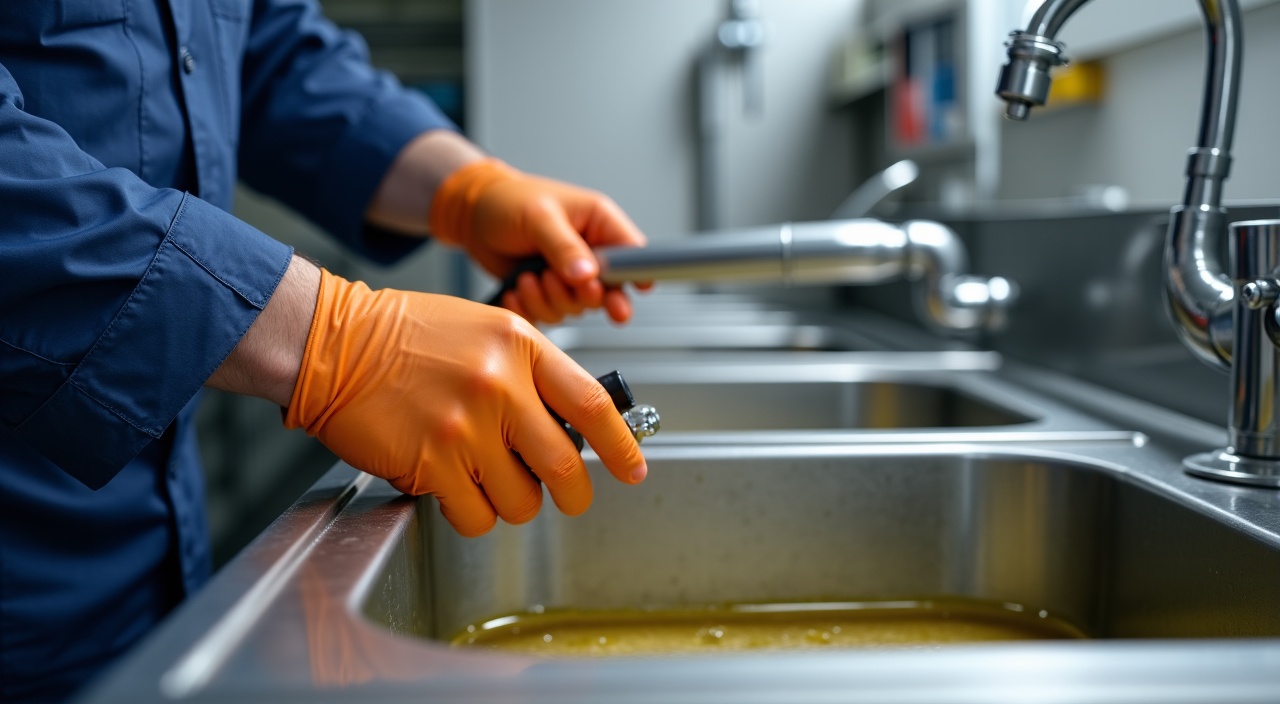
Grease Trap Compliance Is Not Optional — and Neither Is Getting It Right
Every commercial food service operation in Malaysia that discharges kitchen waste into the building drainage system is required to pass that waste through a grease interceptor — commonly called a grease trap. The grease trap captures fats, oils, and grease before they reach the building's sewage system, where accumulated grease causes blockages that become the building owner's or tenant's liability to clear. In shopping malls, grease trap installation is a landlord requirement before the outlet receives a temporary occupancy permit. The specification — size, location, access point configuration — is typically defined by the mall management and inspected before handover.
The problem JWE solves most often is not the absence of a grease trap — it is a grease trap that was installed incorrectly. Too small for the kitchen load, positioned without adequate maintenance access, connected to the wrong drainage branch, or installed at the wrong depth to maintain the required gradient. These installation errors create recurring compliance failures during health inspections and progressively worsen as the trap fills faster than it can be serviced. JWE installs grease interceptors with the size, position, and access configuration that allows them to perform correctly and be maintained without disrupting kitchen operations.
Grease Trap Sizing & Selection
Grease trap sizing is based on the drainage flow rate of the connected kitchen equipment — not a one-size-fits-all selection. JWE sizes grease interceptors to the flow rate from connected sinks, dishwashers, and floor drains, and to any minimum specification required by the building or mall management. Undersized traps fill quickly, require frequent emptying, and fail health inspections.
Mall Specification Compliance
Shopping centre landlords typically specify the grease trap model, size, and position as part of the fit-out specification. JWE has worked across multiple mall environments and is familiar with common landlord grease trap requirements. We install to the specified model and position, provide the required handover documentation, and coordinate the landlord's inspection before opening.
Access-Correct Installation
A grease trap without accessible maintenance points creates a maintenance problem from day one. JWE installs grease interceptors with correctly positioned covers, accessible from the kitchen floor without moving equipment, and with adequate working space for the cleaning contractor to empty and clean the trap. Maintenance access is considered at installation — not after the floor finishes have locked in the design.
Existing Trap Rectification
For existing outlets with a non-compliant or undersized grease trap — one that is failing inspections or backing up into the kitchen — JWE rectifies the installation. This typically involves replacing the trap with a correctly sized unit, repositioning for maintenance access, and reconnecting to the drainage system. Rectification is coordinated with minimum disruption to trading operations.
Common Questions
How often does a commercial grease trap need to be cleaned?
Cleaning frequency depends on the kitchen load. A high-volume restaurant kitchen may require monthly cleaning; a light food preparation operation may manage quarterly. The trap should be inspected at least monthly and cleaned before it reaches 25% capacity with solids, grease, and floating material. JWE installs the trap — cleaning is performed by a licensed waste collection contractor. We can advise on the cleaning schedule appropriate for your kitchen operation.
What happens if the mall inspects and the grease trap is not correctly installed?
The outlet's fit-out permit is withheld until the defect is rectified. This delays the opening date and may incur penalty costs under the tenancy agreement. JWE's installation is done to the mall specification from the outset to avoid this outcome — we review the landlord requirements before installation and confirm compliance before the inspection.
Can grease trap installation be done without disrupting the kitchen?
Not for a new installation that requires floor hacking and drainage connection — that work requires the kitchen to be offline. For an existing outlet, the work is typically done overnight or over a scheduled closure. JWE can programme grease trap installation within the kitchen's weekly closure day or during a planned maintenance shutdown to minimise trading impact.
Appointed F&B Provider
F&B Chain Experience
JWE is the appointed engineering provider for multiple F&B chains operating across Malaysia. Grease trap installation and compliance works are part of the standard fit-out scope for new outlet openings and renovation projects. Our familiarity with chain fit-out requirements means no relearning process for each project.
KFC • Pizza Hut • Texas Chicken
FamilyMart • Coffee Bean • Taco Bell
Grease Trap Issue or New Fit-Out?
Tell us the outlet type, location, and current situation. We will confirm scope and provide a quotation within 3 working days.
Request a QuoteOr call 012-2640888
Grease Management Scope
- Grease trap sizing & specification
- Mall landlord compliance installation
- Access-correct positioning
- Drainage connection & gradient
- Existing trap replacement & rectification
- Inspection coordination & documentation